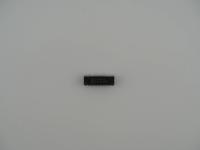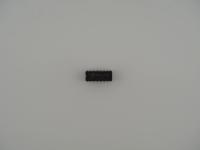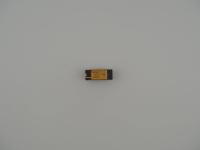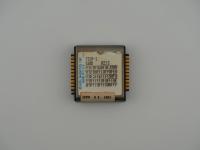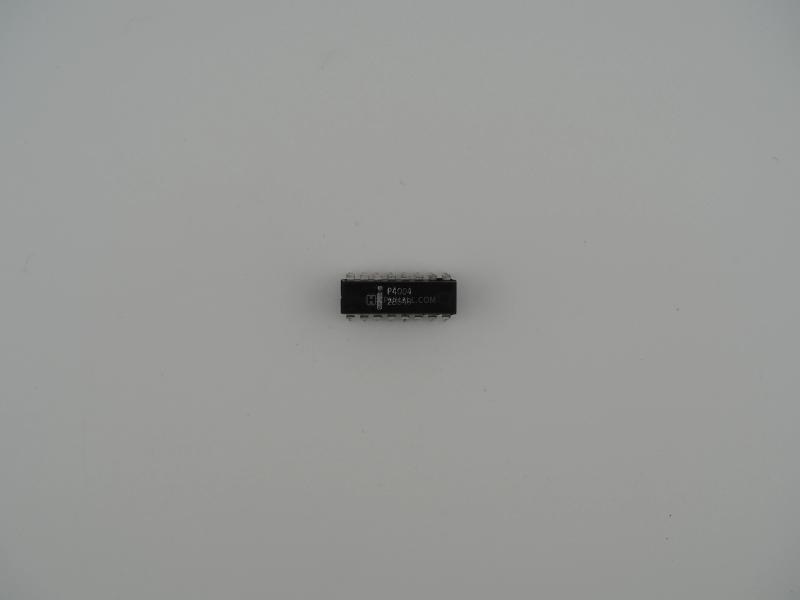

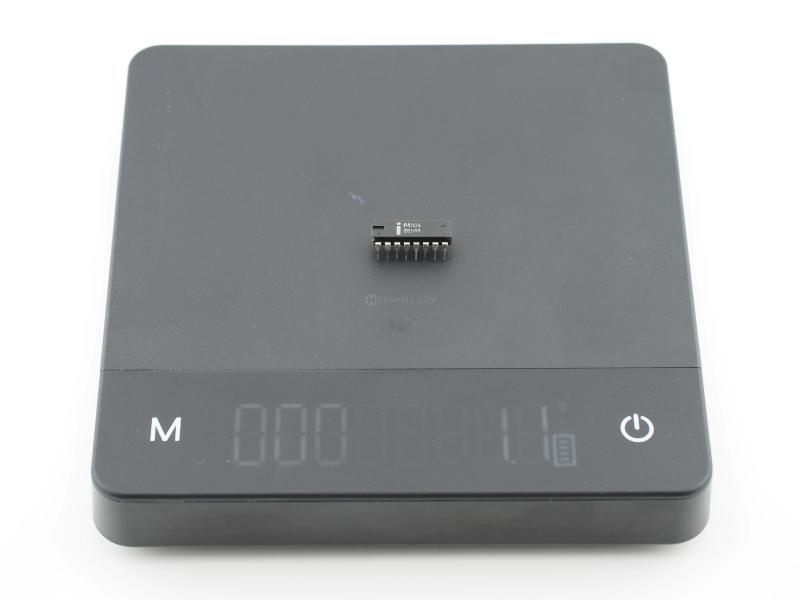
When I first got myself a 4004, I immediately noticed how shockingly small it is. Placing it on the scale, it barely registered at 1.1 grams. We are looking at an artifact that measures roughly 20 millimeters long with just eight tinned pins flanking each side. The surface is a matte black epoxy plastic, completely devoid of the premium ceramic and gold materials found on earlier runs.
Top Markings:i P4004
2854B
Bottom Markings:(50) i 7803
Philippines
The marked text is still crisp. The classic lowercase i Intel logo sits proudly next to the P4004 designation. Flipping the chip over reveals a fascinating bit of history stamped in faint yellow ink. We have another i logo, a (50) factory mark, the origin stamp of the Philippines, and the crucial 7803 date code. This tells me this specific unit rolled off the assembly line in the third week of 1978. The physical condition is pristine. The 16 tinned legs show no signs of harsh socket insertion or desoldering damage.
Diving into the technical weeds of the 4004 reveals absolute genius born from severe physical constraints. Inside this tiny black plastic rectangle lies a die with 2,250 PMOS (p-channel metal-oxide-semiconductor) transistors fabricated on a massive 10 micrometer node. To put that in perspective, modern chips use transistors measured in nanometers.
The biggest challenge Intel faced was the packaging. Standard Dual In-line Packages at the time maxed out at 16 pins. To make a functional processor with so few I/O lines, Federico Faggin and his team had to heavily multiplex the bus. The tiny 4-bit bus had to carry memory addresses, data, and instructions sequentially across multiple clock cycles. It ran at a blistering 740 kHz and required a rather toasty 15 volts to operate. While it was slow and complex to program, it was a complete, programmable logic device scaled down to a single piece of silicon.
The lore surrounding this chip is legendary. In 1969, a Japanese company named Busicom approached Intel to design a set of custom logic chips for a new electronic calculator. Ted Hoff and Stan Mazor realized that designing a dozen custom logic chips was inefficient. They proposed a radical idea. They wanted to build a single, general-purpose programmable chip that could do calculator math via software rather than hardwired logic.
Intel bought the rights back from Busicom for $60,000, allowing them to sell the 4004 to other companies. That single business decision birthed the modern microprocessor industry. A common myth is that the 4004 was used in early personal computers. In reality, it was an embedded controller. It was far too limited for general-purpose computing. You would find these chips running traffic lights, pinball machines, and blood analyzers. It laid the architectural groundwork for the 8008, the 8080, and ultimately the x86 architecture that likely powers the device you are using right now.
When I see an Intel 4004, my first instinct is always to check the prefix and the date code. The P in P4004 officially designates this as the plastic DIP version. The early 1971 units were marked C4004 and featured stunning white ceramic packaging with gold traces, making them incredibly valuable to collectors today.
Finding a date code of 1978 (week 3) on this chip perfectly illustrates the lifecycle of early embedded hardware. Even though the vastly superior 8-bit Intel 8080 was already dominating the market by 1978, legacy industrial customers still needed replacement parts for existing MCS-4 systems. Intel continued churning out these cheap, plastic P4004 variants well into the early 1980s. This specific unit was likely manufactured in the Philippines test-and-assembly facility to fulfill a bulk industrial order long after the architecture itself was obsolete.