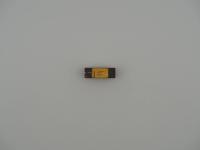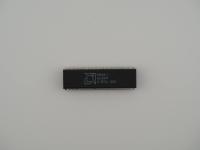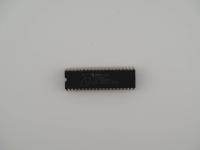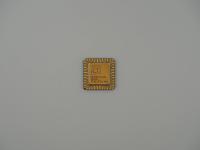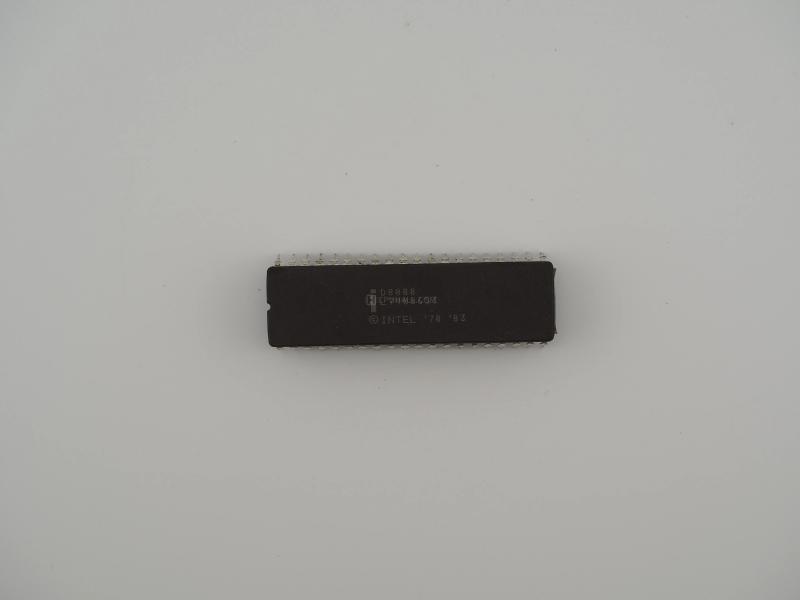

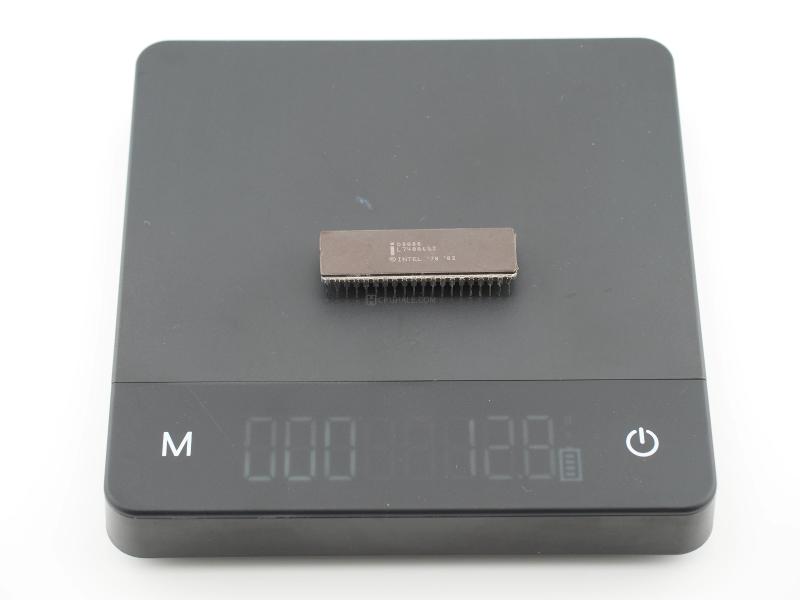
This is the D8088, the ceramic package variant that feels significantly more substantial than the later plastic versions. The macro shots reveal a gorgeous, matte dark purple ceramic substrate that has aged remarkably well. I can see the high-fidelity micro-contrast in the laser etching on the top surface.
The transcription of the top marking is as follows:
D8088
L7400653
(C) INTEL '78 '83
On the underside, the artifact bears the marks of its production lineage:
47180841AB
MALAY VN
(CKD) (AD)
The gold-plated pins are in excellent condition, showing only the slightest hint of oxidation near the base where they meet the ceramic body. The brazing is clean, a testament to the high manufacturing standards Intel maintained for these early ceramic DIPs. There is a small notch on the left side, the classic indicator for Pin 1 alignment.
Technically, the 8088 is a bit of a "Frankenstein" masterpiece. Inside that ceramic shell sits the same 16-bit internal architecture and execution unit as the 8086, but with one crucial, cost-cutting handicap: an 8-bit external data bus.
Fabricated on a 3-micron HMOS process with roughly 29,000 transistors, this chip was designed to solve a very specific problem. In the late 70s, 16-bit support hardware (like motherboards and peripherals) was prohibitively expensive. By restricting the external bus to 8 bits, Intel allowed engineers to use cheaper, existing 8-bit components while giving software developers a 16-bit playground. It runs at a modest 5 MHz, but in 1981, that was enough to change the world. The thermal output is negligible by modern standards, but the DIP-40 package was efficient at dissipating the heat generated by its humble power requirements.
This is the chip that IBM chose for the IBM Model 5150, better known as the original IBM PC. The lore suggests that IBM's "Project Chess" team chose the 8088 over the Motorola 68000 primarily because Intel's support chips were more mature and cheaper. It was a decision based on logistics that ended up crowning Intel as the king of the desktop for the next four decades.
A common myth is that the 8088 was "slower" than the 8086 in every way. While the 8-bit bus definitely created a bottleneck for memory-heavy tasks, for many instructions, the internal 16-bit registers meant it could still outpace pure 8-bit competitors like the Z80. One of the funnier quirks of this era is that the 8088 was often paired with an 8087 math coprocessor, which was frequently larger and more expensive than the CPU itself just to handle floating-point math.
The markings on this artifact tell a clear story. The D prefix confirms the Cerdip (Ceramic Dual In-line Package). The copyright dates of '78 '83 and the MALAY (Malaysia) assembly mark suggest this unit was produced in the mid-80s, likely as a replacement part or for one of the many PC clones that flooded the market after the 5150's success. The L7400653 code is a batch-specific identifier from Intel's Malaysian facility. Everything about the texture and the specific typeface of the etching confirms this is an authentic Intel production piece from the golden era of ceramic packaging.