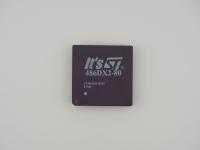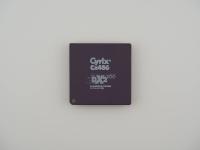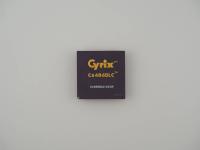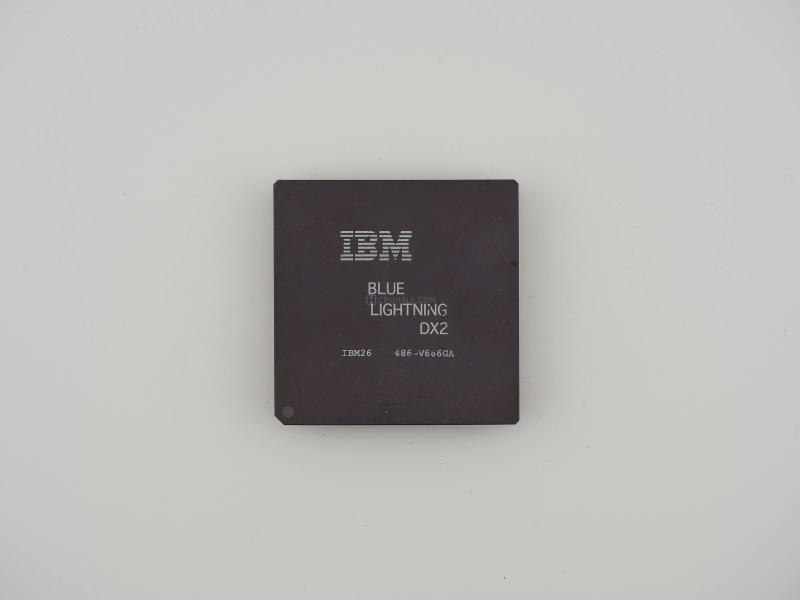

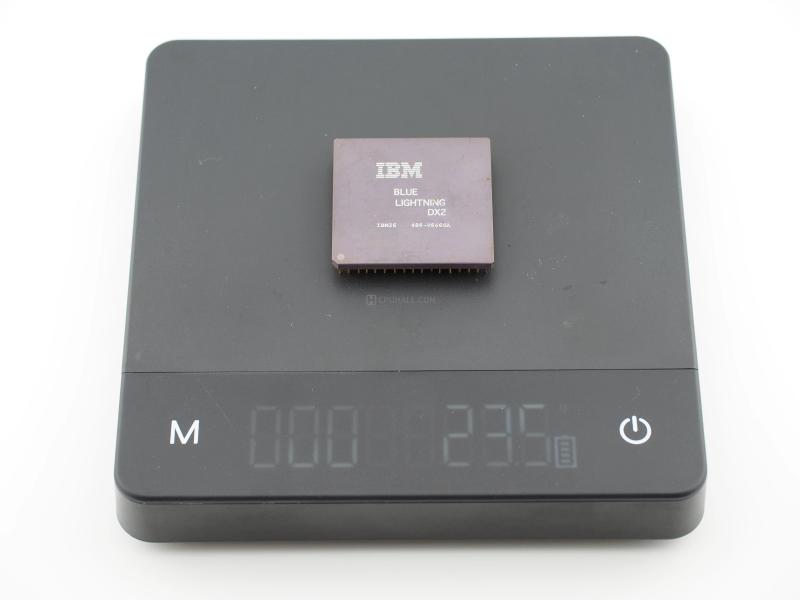
Holding this specific unit, the first thing I noticed was the sheer density of it. Clocking in at exactly 23.5 grams on the scale, this processor feels like a miniature weapon. The top side is a beautiful, stark slab of dark purple and grey ceramic. It features the classic striped IBM logo and crisp white silk-screened text that instantly dates it to the early 1990s.
IBM
BLUE
LIGHTNING
DX2
IBM26   486-V666GA
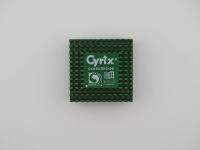
Flipping this artifact over is where the real fun begins. The beautifully brazed gold pins form the classic PGA-168 layout, framing a central cavity. Within that square cavity, faint laser etching on the substrate reveals the true origin of this piece of silicon. The micro-contrast captures it perfectly.
COPYRIGHT USA
1993 CYRIX
IBM 9314 P08049
26H2201 PQ
There is no physical damage or bent pins on this unit. The gold plating is still incredibly lustrous, and the ceramic substrate shows minimal handling wear. It is a museum-grade survivor.
Underneath the heavy ceramic and gold packaging, this chip represents a fascinating era of processor architecture. Despite the massive IBM branding on the front, the core logic is entirely Cyrix. The x86 instruction set was completely reverse-engineered by the Cyrix engineering team to maintain compatibility with Intel software without directly copying Intel microcode.
The "DX2" designation signifies a clock-doubled architecture. This specific chip operated on a 33 MHz external front-side bus while running internally at 66 MHz. This was a critical engineering workaround at the time, allowing motherboard manufacturers to use cheaper, slower board components while the CPU core crunched numbers at double the speed. Operating at standard 5V (or sometimes modified 3.3V depending on the board), this ceramic package absorbed and dissipated a significant amount of heat, though it rarely required the massive active cooling solutions seen on later chips.
The "Blue Lightning" moniker is easily one of the most aggressive and cool marketing names ever stamped onto a piece of silicon. While Intel was pushing the somewhat clinical "OverDrive" brand, IBM countered with literal lightning.
The lore behind this specific chip is steeped in a massive corporate loophole. Cyrix was a fabless semiconductor company. They had brilliant engineers but absolutely zero factories to print their designs. IBM, conversely, had colossal, world-class fabrication plants but was struggling to keep up with Intel in the consumer CPU market. The two struck a legendary deal. IBM would act as the foundry for Cyrix. In exchange for manufacturing the chips, IBM secured the right to produce and sell a percentage of these Cyrix-designed processors under their own brand.
Intel furiously sued Cyrix for patent infringement. However, because IBM held an extensive patent cross-licensing agreement with Intel, the courts ultimately ruled that Cyrix chips manufactured in IBM fabs were legally protected under the IBM license. This specific artifact is a physical manifestation of that exact legal loophole.
A common myth is that all IBM Blue Lightning chips were based on IBM's proprietary 386-derivatives (the 486SLC and DLC cores with custom cache). This specific artifact completely shatters that assumption, proving that IBM eagerly slapped their premium "Blue Lightning" brand directly onto standard Cyrix 486DX2 stock.
I have absolute confidence in the identification and provenance of this unit. The visual evidence is irrefutable. The front of the chip loudly proclaims its IBM marketing identity, while the laser etchings on the back confirm the Cyrix engineering lineage.
The 9314 date code etched on the rear indicates that this specific piece of silicon was manufactured during the 14th week of 1993. The part number 486-V666GA cleanly aligns with known 66 MHz variants of the Cx486DX2 architecture. The 26H2201 string is a standard internal IBM part number used for inventory and ordering. Everything about the physical condition, the typography, and the package weight aligns perfectly with authentic, factory-produced IBM/Cyrix silicon from that era.