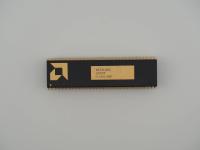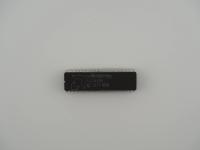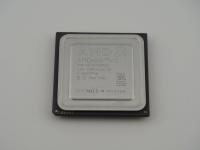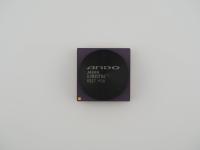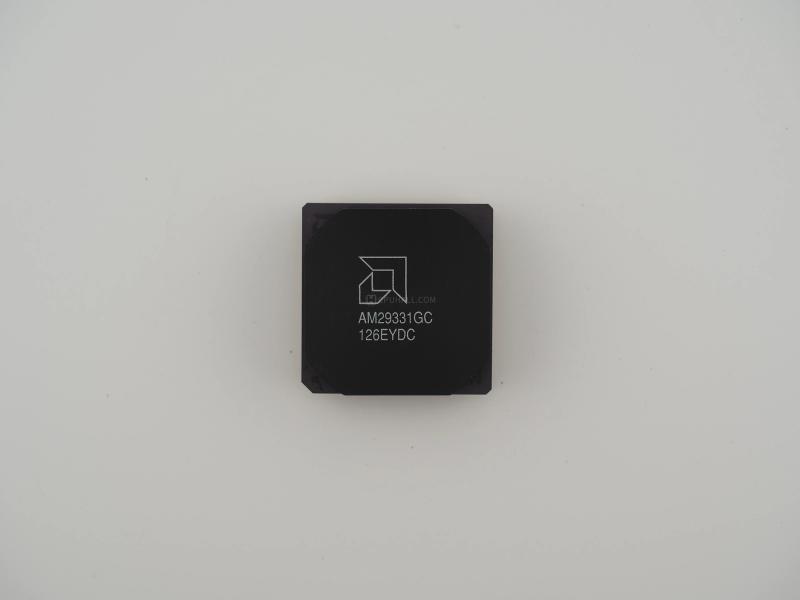

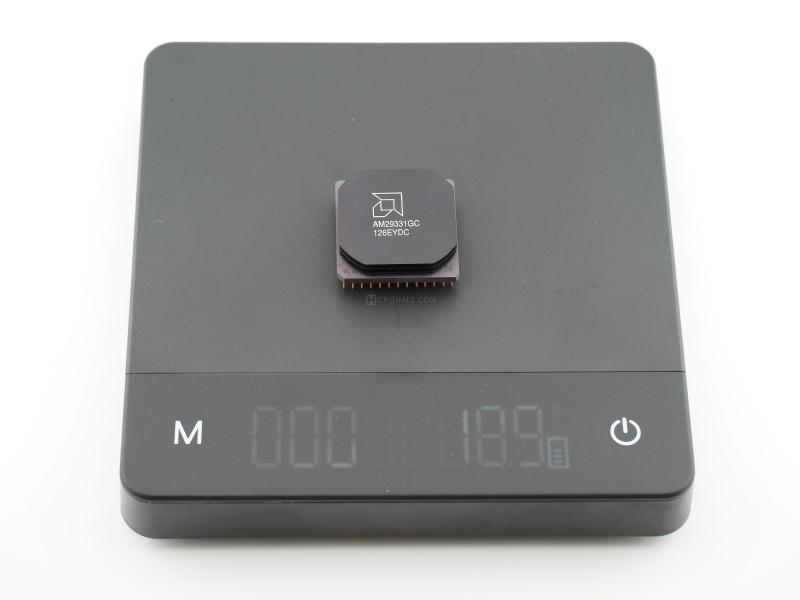
This artifact is a masterclass in mid-1980s industrial chip design. The top features a dark, heavily stepped metallic heat spreader that is integrated directly into the ceramic substrate, giving it an aggressive, almost brutalist architectural profile.
The laser etching on the top heat spreader is crisp and clear:
[AMD Logo]
AM29331GC
126EYDC
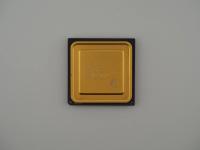
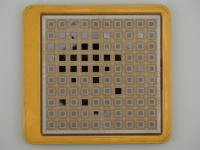
Flipping the chip over reveals a gorgeous, dense array of gold-plated pins surrounding a large central gold cap. We can clearly observe the intricate brazing where each pin meets the ceramic.
The stamped text on the bottom gold cap reads:
MALAYSIA
9023XP
4931
The AM29331 is not a traditional CPU. It is a 16-bit Microprogram Sequencer, a critical component of AMD's Am29300 family of bipolar bit-slice processors. In the days before fully integrated monolithic RISC processors dominated the market, computer architects built custom CPUs using modular "slices" of processing power.
This specific unit was designed to control the execution sequence of microinstructions stored in microprogram memory. It handles branching, looping, and subroutine calls at incredibly high speeds. Because the AM29300 family was built using bipolar ECL (Emitter-Coupled Logic) internal circuitry with TTL-compatible I/O, these chips ran phenomenally hot. That thermal reality explains the massive, multi-tiered heat spreader clamped to the top of the dark ceramic package. It needed serious airflow to dissipate the heat generated by the fast-switching bipolar transistors inside.
AMD's earlier AM2900 family (the 4-bit slices) is legendary and found its way into everything from arcade machines to military avionics. The AM29300 series was the ambitious 32-bit evolution of that concept. AMD wanted to give mainframe and superminicomputer designers the ultimate building blocks for custom iron.
The lore here is a story of market timing. Just as the AM29300 family was trying to establish dominance in high-end, custom-built computing, fully integrated 32-bit RISC microprocessors like the SPARC and MIPS architectures arrived on the scene. These single-chip RISC processors eventually rendered the complex, multi-chip bit-slice architecture obsolete. As a result, the AM29300 family never saw the universal adoption of its 4-bit predecessor, making artifacts like this AM29331 somewhat of a heavy metal swan song for the bit-slice era.
I am highly confident in the identification of this artifact. The AM29331GC marking perfectly aligns with AMD's databooks for the 16-bit Microprogram Sequencer packaged in a Pin Grid Array.
Looking closely at the bottom cap, the date code 9023 tells us a lot about the timeline of this specific unit. It indicates that this chip was assembled in week 23 of 1990 in Malaysia. This is fascinating because it proves that even as single-chip RISC processors were taking over the mainstream market in the early 1990s, there was still active demand for these specialized bit-slice sequencers to maintain or build specific legacy high-end systems.