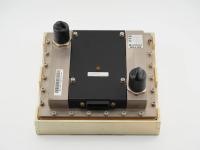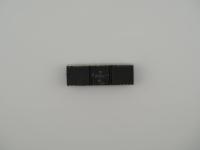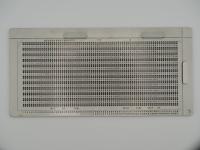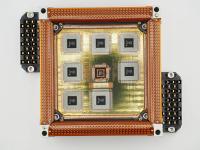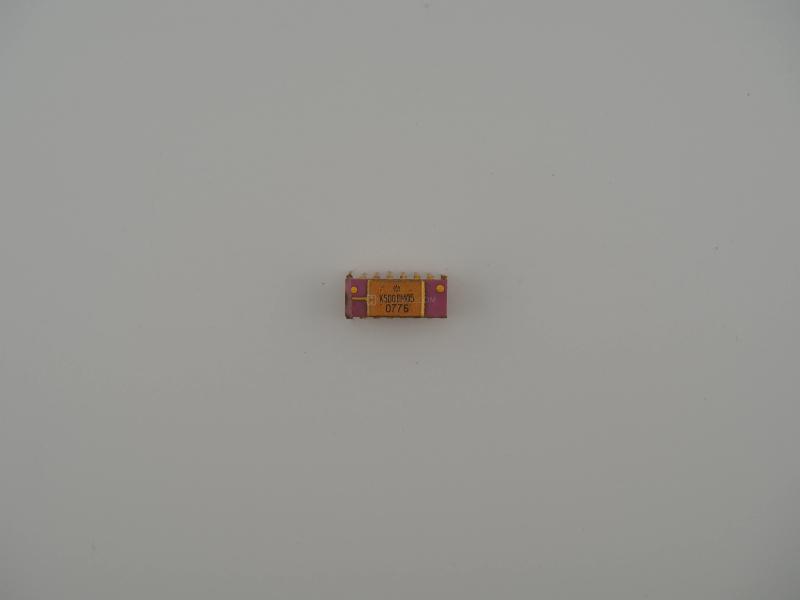

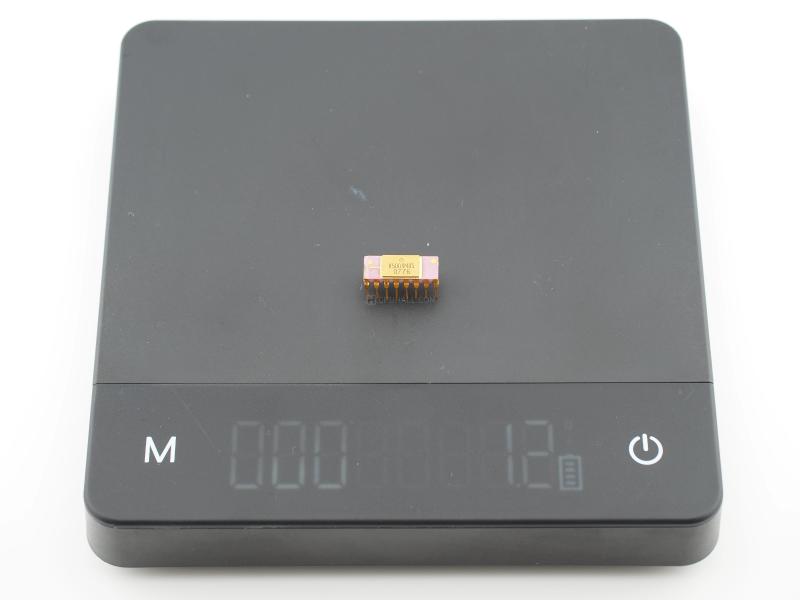
This specific unit is a stunning example of cold war silicon packaging.
Top Markings:(Logo) Mezon Plant
К500ЛМ05
0776
Bottom Markings:ОТК (Inside a stamped triangle)
Looking at the top of this chip, the eye is instantly drawn to the massive, brazed gold lid that protects the silicon die. The ceramic substrate itself is a breathtaking shade of pinkish-purple alumina. This vibrant purpuric ceramic was highly characteristic of Soviet military and high-reliability aerospace components of the 1970s and 1980s. Flanking the gold cap are two hand-applied yellow paint dots, serving as alignment markers to indicate pin 1.
Flipping the board over reveals the intricate, heavy gold plating on the brazed pins. The bottom surface bears a faint, hand-stamped triangle containing the letters ОТК. This is the Otdel Tekhnicheskogo Kontrolya stamp, marking the chip as having passed the rigorous state quality control department. The overall condition of the pins shows some minor oxidation and wear, but the thick gold plating has preserved the integrity of the contacts beautifully over the decades.
This is not a traditional microprocessor. The K500LM05 is a pure logic gate built on ECL (Emitter-Coupled Logic) architecture. Specifically, the Soviet 500 series was a direct, unapologetic functional clone of Motorola's legendary MECL 10,000 (MECL 10K) logic family.
The engineering behind ECL is fascinating and brutal. Unlike standard TTL or CMOS logic where transistors are driven fully on or fully off, ECL transistors are kept in the active region. They never reach saturation. By avoiding the time-delay required to pull a transistor out of saturation, ECL achieves blisteringly fast switching speeds.
The tradeoff for this speed is immense power consumption. ECL logic dumps massive amounts of heat because it constantly draws current, regardless of its switching state. The heavy ceramic package and the massive gold lid on this artifact are not just for aesthetics. They are absolutely critical thermal management components designed to dissipate the relentless heat generated by the non-saturating silicon inside.
The story of the K500 series is intrinsically tied to the Soviet Union's race to maintain technological parity during the Cold War. By the late 1960s and early 1970s, the Soviet Ministry of Electronic Industry made a strategic decision to standardize their computer architectures by cloning proven Western designs rather than relying entirely on domestic, proprietary instruction sets.
To build their massive ES EVM mainframes (which were essentially reverse-engineered IBM System/360 and System/370 machines) and their high-speed Elbrus supercomputers, they needed extremely fast logic. Motorola's MECL 10K was the gold standard globally for high-speed mainframe logic at the time. The Soviets painstakingly decapped, analyzed, and duplicated these chips, fabricating them in massive quantities.
A common myth is that Soviet chips were inherently inferior in physical quality. While their silicon yields and fabrication nodes often lagged behind the West by several years, their packaging was frequently superior. Because Soviet state-run factories did not operate under the same capitalist cost-cutting pressures as Western civilian semiconductor companies, they used pure gold and high-grade ceramics with reckless abandon. This resulted in parts that look like absolute heavy metal jewelry compared to the cheap black plastic DIP packages Motorola was pumping out for the commercial market.
Identifying this piece requires decoding the Cyrillic and the factory symbology. The logo stamped on the top lid features a stylized "M" contained within a diamond shape. This specific sigil belongs to the Mezon plant located in Kishinev, Moldavian SSR. Mezon was a powerhouse for producing high-reliability integrated circuits for state and military contracts.
The part number К500ЛМ05 tells us everything about its function. The К designates a standard commercial or general-purpose temperature rating, though the physical package implies military-grade construction. The 500 series confirms it is an ECL 10K equivalent. The ЛМ characters specify its function as a multi-input logic gate.
The date code 0776 is unambiguous. This unit was manufactured in the 7th week of 1976. The presence of the ОТК stamp on the bottom cements its provenance as a state-inspected component, likely destined for a high-priority mainframe installation or aerospace control system where the blistering speed of ECL was non-negotiable.