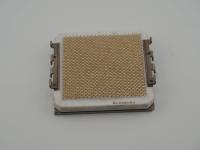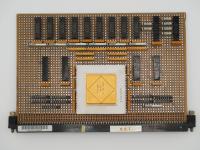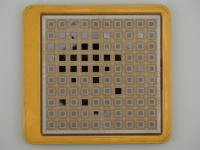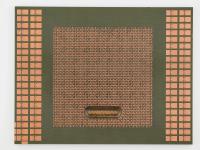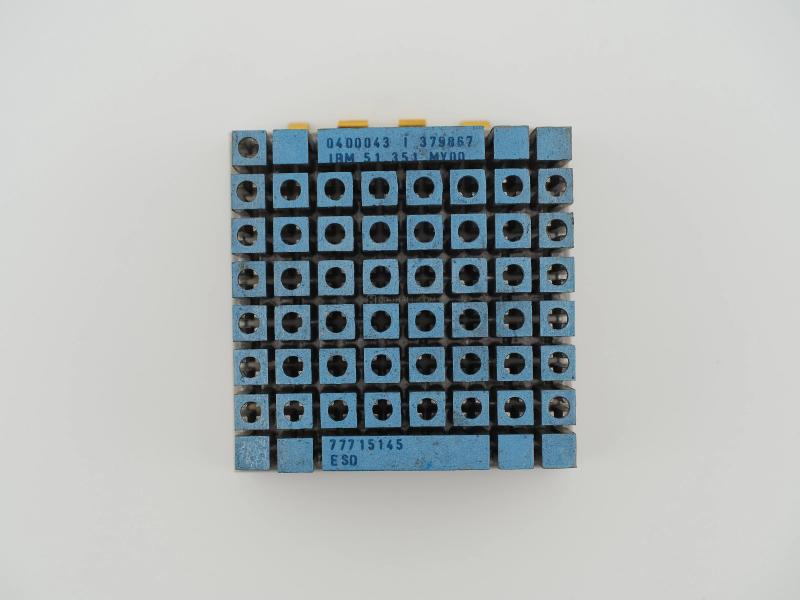

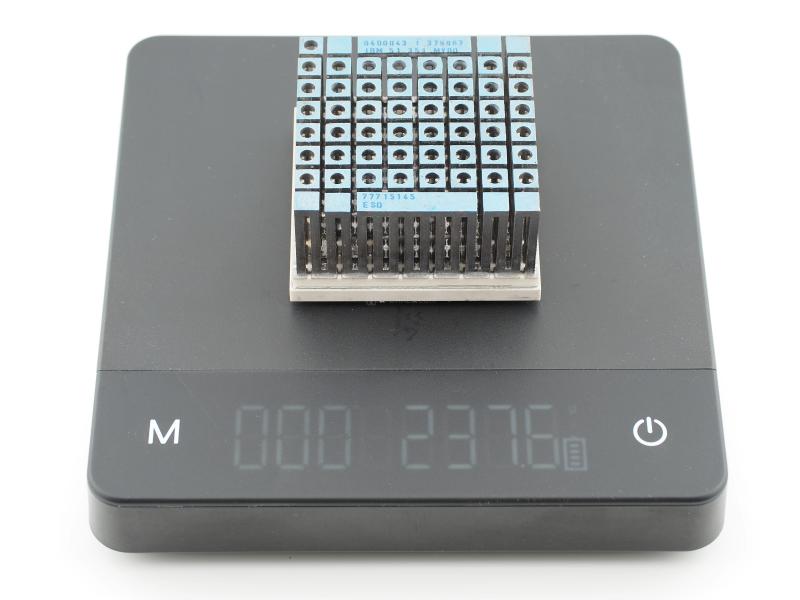
Holding this piece is a profound experience. At exactly 237.6 grams, this 5.5cm square artifact feels like a solid brick of computing history. It has a brutalist, almost militaristic aesthetic that modern silicon simply cannot match. What we have here is a breathtaking multi-chip module from an IBM 4381 mainframe system.
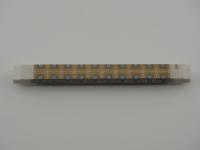
I immediately noticed the brilliant blue anodized aluminum cooling structure dominating the top half. This is not a standard heatsink. It features an 8x8 grid of square posts, and each post is hollowed out with a circular bore right down the center. Looking at the side profile, those posts are cut with deep, vertical fins dropping down to the base. Below this heavy metal crown sits a pristine white ceramic substrate. Flipped over, the bottom reveals a staggering forest of brazed gold pins, arranged in a dense grid with gold-plated edge connectors flanking the sides. The sheer density of the metallurgy here is staggering.
Here are the exact markings I pulled off the surface:
Side Metal Fin Markings:0400043 I 379867
IBM 51 351 MY00
Lower Metal Edge Markings:77715145
E SD
Ceramic Base Markings (Edge):249EE20 5HI S1LLL
Diving into the engineering of this artifact reveals IBM at the peak of its proprietary hardware era. This is an air-cooled Thermal Conduction Module variant, though typically referred to as an MCM in this specific form factor. The IBM 4381 was a beast of a machine, and the thermal density of its bipolar logic gates was a massive problem.
To solve this, IBM engineers designed the impingement cooling system you see right here. High-velocity air was forced directly downward into the hollow bores of those blue aluminum posts. The air would hit the bottom of the bore, absorbing the immense heat generated by the logic chips resting on the ceramic below, and then violently vent outward through the deep vertical slits cut into the sides of the block. It is a highly aggressive, incredibly loud, and remarkably efficient way to air-cool dense bipolar circuits without resorting to the complex chilled-water plumbing found on the larger IBM 3081 mainframes.
The bottom ceramic substrate is equally impressive. The hundreds of gold pins are not just for basic data I/O. A massive number of these pins are dedicated entirely to power delivery and ground because bipolar transistor technology was notoriously power-hungry. The ceramic itself contains multiple layers of complex internal wiring, routing signals between the individual bare silicon dies housed under that aluminum block.
Introduced in 1983, the IBM 4381 was the ultimate "super mini" killer. During the early 80s, IBM was facing stiff competition from DEC and their VAX systems in the mid-range computing market. IBM's response was the 4300 series, bringing the legendary System/370 mainframe architecture down to a footprint that didn't require a dedicated, liquid-cooled data center.
This specific module is a testament to that transition. It bridges the gap between the small-scale logic of the era and the massive water-cooled behemoths of the top-tier enterprise world. Hardware enthusiasts often mythologize the giant liquid-cooled TCMs, but I always point to these air-cooled modules as the unsung heroes of the 1980s corporate world. They powered banks, airlines, and large retail chains. A common misconception is that all mainframe CPUs from this era ran at standard megahertz speeds you could easily compare to a PC. In reality, these chips were measured in cycle times. The 4381 had a cycle time of around 68 nanoseconds, relying on wide data paths and massive parallel operations rather than sheer clock frequency to chew through enterprise workloads.
Identifying IBM hardware from this era can feel like translating an ancient language, but the visual evidence here is definitive. The signature blue anodized impingement heatsink is the dead giveaway for the 4381 system architecture.
The part number 0400043 aligns perfectly with IBM's internal component cataloging for mid-80s logic modules. The IBM 51 code likely indicates the specific manufacturing plant and line, while the codes stamped directly onto the white ceramic (249EE20) represent the batch and substrate layer identifiers used during the extremely delicate co-fired ceramic baking process. Many of these units were tragically destroyed in the late 1990s and 2000s by e-waste recyclers desperate to melt down the thick gold pins. Finding one intact, especially with the anodized blue finish relatively unmarred by scratches or oxidation, is a fantastic addition to the collection.