
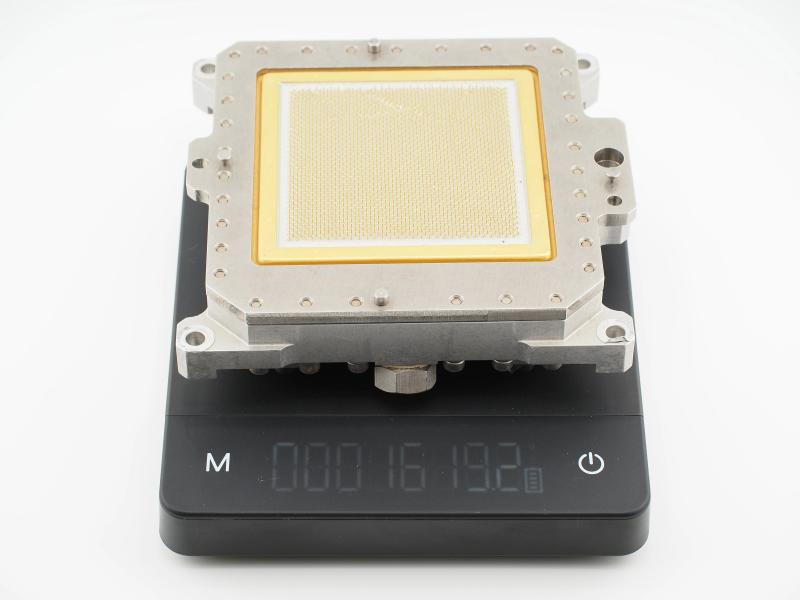
Holding this piece is less like handling computer hardware and more like holding a piece of a nuclear submarine. Placing this artifact on the scale, it registers a massive 1619.2 grams. That is over three and a half pounds of sheer engineering density for a single computing component.
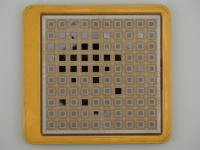
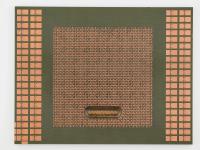
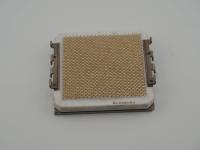
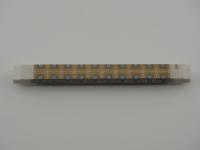
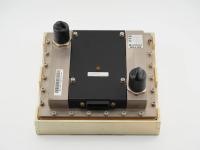
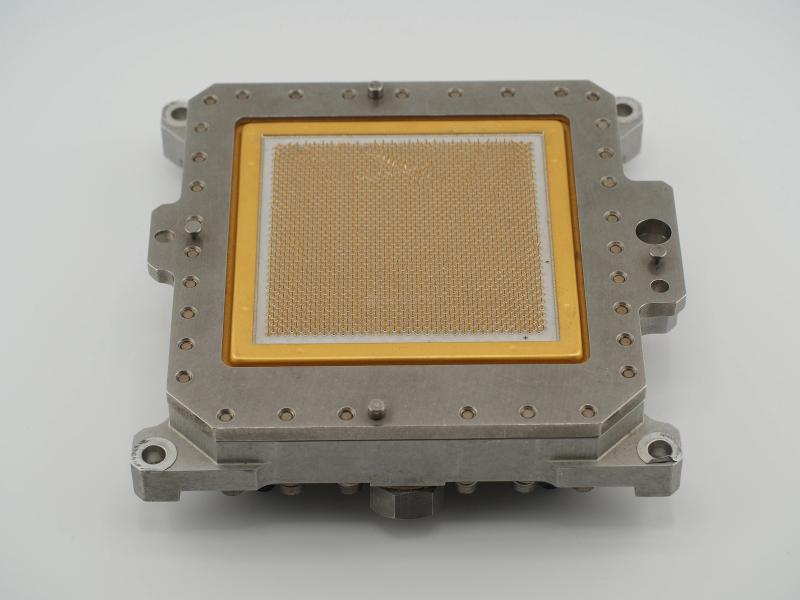
Looking at the underside, we are greeted by a mesmerizing field of gold. There are approximately 1,800 pristine gold pins brazed onto a flawless white ceramic substrate. This ceramic square is framed by a thick gold-plated rim, which is then bolted into an incredibly heavy, machined metal block. Turning the unit over, the top plate is secured by a perimeter of heavy-duty hex screws, with a few showing a distinct blued, iridescent metallurgical finish from the factory torquing process. Jutting out from the side is a large hexagonal plug, a dead giveaway to the extreme liquid cooling required to keep this monster from melting down.
The original green factory label is still perfectly intact on the side profile, and I have transcribed the crucial identification data below:
Plaintext
MSN  33221059
E.C. 215392
DATE 07MAR83
P/N  4459121
JOB  SC3C1205
IBM
Right below the label, etched directly into the metal casing, is the sequence 300X9306728, alongside a handwritten inspector mark that looks like S/T. The date code of March 7, 1983, perfectly places this artifact in the golden era of big iron.
This is not a microprocessor. This is a Thermal Conduction Module (TCM). To understand the engineering here, you have to realize that in the early 1980s, you could not fit a massive mainframe CPU onto a single piece of silicon. Instead, IBM broke the processor down into dozens of smaller, highly specialized bipolar logic chips.
Inside this sealed metal fortress, there is a multi-layer ceramic substrate containing over a hundred individual chips. These chips ran incredibly hot. To solve the thermal nightmare, IBM engineers designed a breathtaking mechanical solution. Inside the metal block you see in these photos, there are spring-loaded aluminum pistons. Each individual chip on the ceramic board has a dedicated piston physically pressing down onto it.
The entire internal cavity of this block was pumped full of helium gas because helium conducts heat much better than normal air. The heat traveled from the chips, through the helium and pistons, into the massive metal housing. Finally, a chilled water jacket was clamped onto the top of this flat metal plate, flowing liquid over the module to carry the massive thermal load away. It is a masterpiece of materials science, plumbing, and electrical engineering.
The TCM was the beating heart of the IBM 3081 mainframe, a machine that dominated the enterprise computing world in the early 1980s. When you went to a bank, an airline, or a major government institution in 1983, their data was flowing through pins exactly like the ones on this module.
There is a tragic lore surrounding these TCMs. Because they are absolutely packed with precious metals (heavy gold plating, thick gold pins, palladium, and platinum in the ceramic layers), the vast majority of these modules were brutally dismantled and melted down by scrap recyclers when the mainframes were decommissioned. Finding one in this pristine, sealed condition with perfectly straight pins is exceptionally rare. It survived the scrappers to become a holy grail for heavy metal hardware collectors.
Based on the visual evidence, the 1983 date code, and the massive 1800-pin grid array, I am incredibly confident this is a logic module from an IBM 308X series mainframe, most likely a 3081 or 3084.
The part number 4459121 dictates the exact microcode and logic arrangement of the chips inside. While IBM's specific internal part number registries from 1983 are notoriously difficult to track down outside of physical maintenance manuals, the physical architecture is undeniable. The combination of the specific hex-bolt pattern, the side cooling plug, and the dimensions of the ceramic substrate perfectly match the specifications of the S/370 architecture TCMs fabricated in Poughkeepsie, New York during this era.